
What Turnkey Interior Design Means in Dubai & Abu Dhabi
Turnkey interior design means…
One company takes a bare or dated space and returns it fully finished and furnished, handling design, 3D visualisation, joinery drawings, material procurement, construction supervision, furniture delivery and final styling. The client hands over a key at the start and receives a liveable home at the end.
The word "turnkey" has been borrowed from construction, where it described a building so complete that the buyer needed only to turn the key and walk in. Applied to interiors, it means the same thing: you are not managing a process, you are commissioning an outcome. Every decision, every trade and every delivery sits with one team rather than being split across a designer, a joinery workshop, a fit-out contractor and a furniture retailer who have never spoken to each other.
In Dubai and Abu Dhabi, where new communities keep delivering handover-ready shells and homeowners want to move quickly, the demand for this kind of service has grown sharply. But not every company that uses the word "turnkey" on its website actually delivers it. Understanding what the process genuinely involves helps you ask the right questions before signing anything.
What is included in turnkey interior design?
A genuine turnkey service runs through eight distinct stages. Skipping or outsourcing any of them creates the gaps that cause most fit-out problems in the UAE.
1. Consultation and site survey
The first meeting is about understanding how you live, which rooms you use most, who occupies the space, how you feel about natural light, storage needs, entertaining. A good designer asks more than they talk. A site survey follows: accurate measurements, ceiling heights, the position of utility points, structural columns and window orientations. Without measured drawings everything that comes later is an approximation.
2. Mood board and 2D layout
The designer presents a direction: a mood board showing materials, colours, textures and a style reference, alongside a 2D floor plan showing how furniture will be placed and how traffic flows through rooms. This is the stage to push back. Moving a sofa on paper costs nothing; moving it once it has been delivered costs several hundred dirhams and a week of patience.
3. 3D visualisation
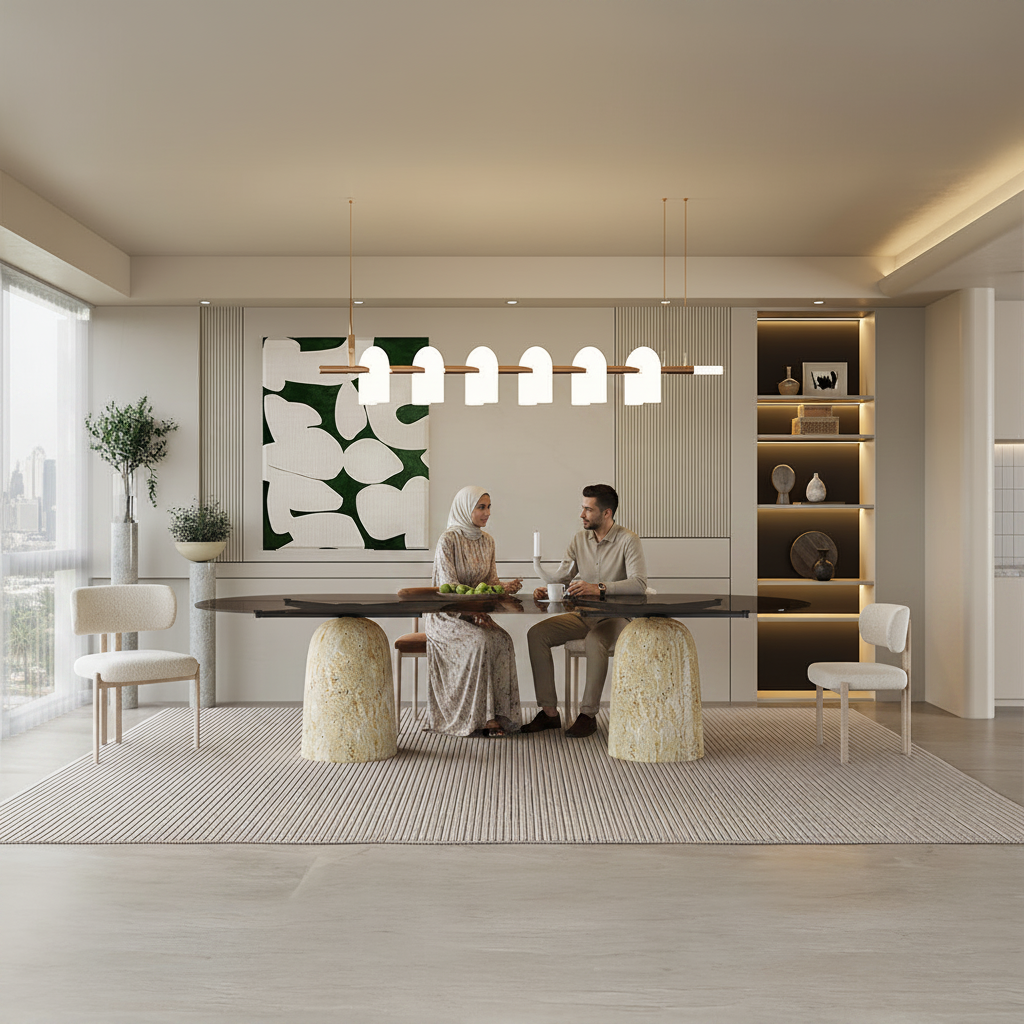
Photorealistic renders let you see the finished space before a single wall is touched. The render vs reality standard, where completed projects closely match their approved 3D images, is one of the clearest ways to judge whether a studio has real execution discipline. Studios that cannot show you a side-by-side comparison of renders and finished photography should be pressed on why.
4. Joinery and wall design drawings
Custom joinery, TV walls, kitchen cabinetry, wardrobes, under-stair storage, requires detailed shop drawings before any fabrication begins. These drawings specify material thickness, edge profiles, hardware and fixings. Without them, the joinery workshop is guessing, and guessing leads to site modifications that eat into both budget and schedule.
5. Material selection
Tiles, stone, timber, paint colours, upholstery fabrics, wallpapers and hardware are all signed off with physical samples before ordering. This stage prevents the single most common complaint in UAE fit-outs: "the colour looked different on screen." A turnkey studio manages lead times at this point, materials that ship from Italy or Spain often take six to ten weeks, and ordering them late pushes the entire programme.
6. Execution and site supervision
This is where the service earns its premium. A site supervisor coordinates the sequence of trades, demolition, civil works, MEP (mechanical, electrical, plumbing) modifications, plastering, tiling, joinery installation, painting, so each trade finishes before the next begins. In a fragmented project, nobody owns this sequence, and that is where days turn into weeks of delay.
7. Furnishing and styling
Once the shell is complete, furniture, lighting, rugs, artwork and accessories are delivered and placed according to the approved layout. Final styling, scatter cushions, plants, books, decorative objects, is the layer most homeowners underestimate. It is also what makes a finished room look like the render rather than a showroom floor.
8. Handover
A snagging walk-through identifies any items that need attention before the studio closes the project. You should receive a defects liability period (typically 12 months for joinery and structural works), care instructions for stone, timber and upholstery, and contacts for after-sales support. Get all of this in writing as a condition of the final payment milestone.
Completed projects in the UAE
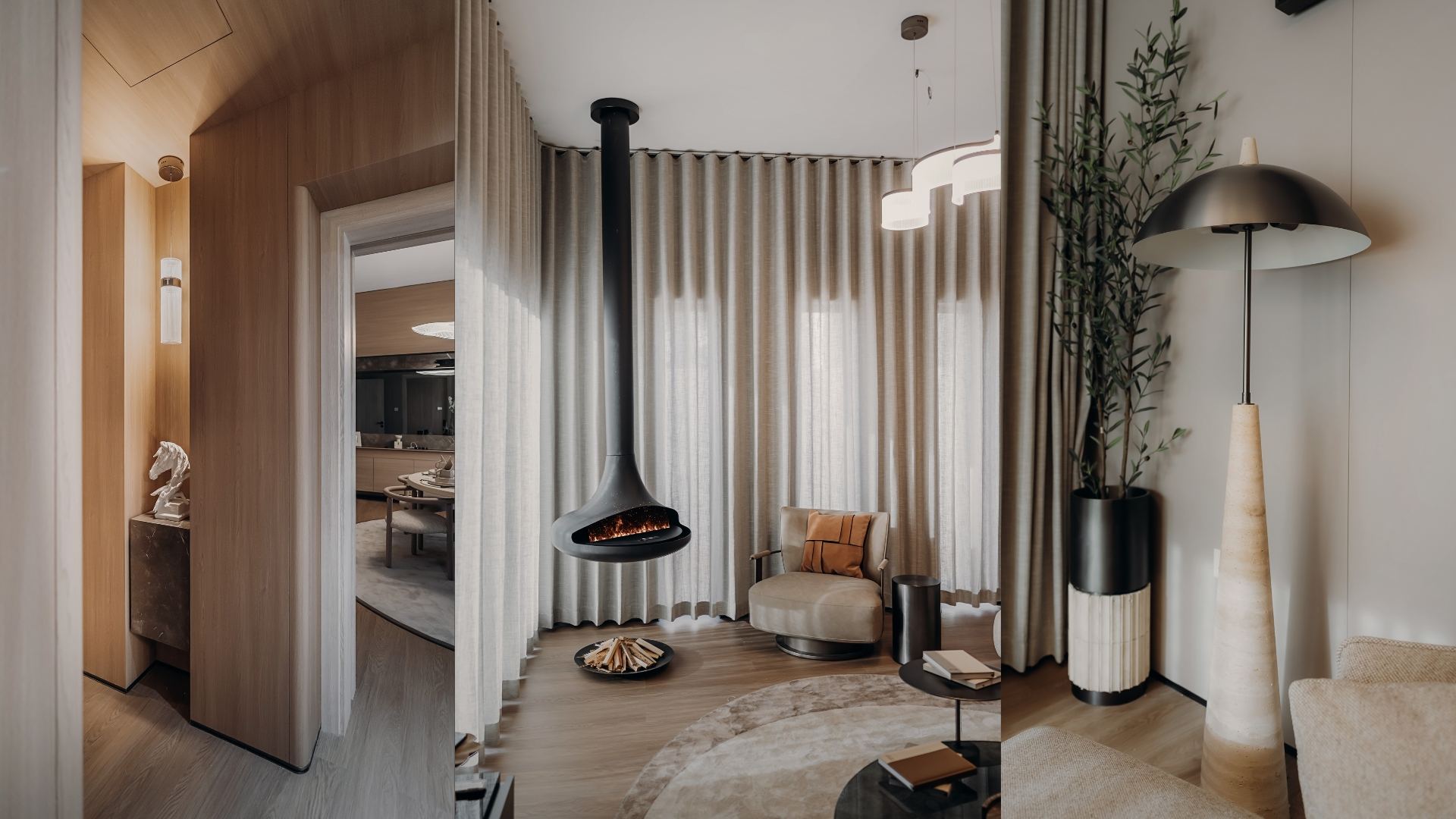
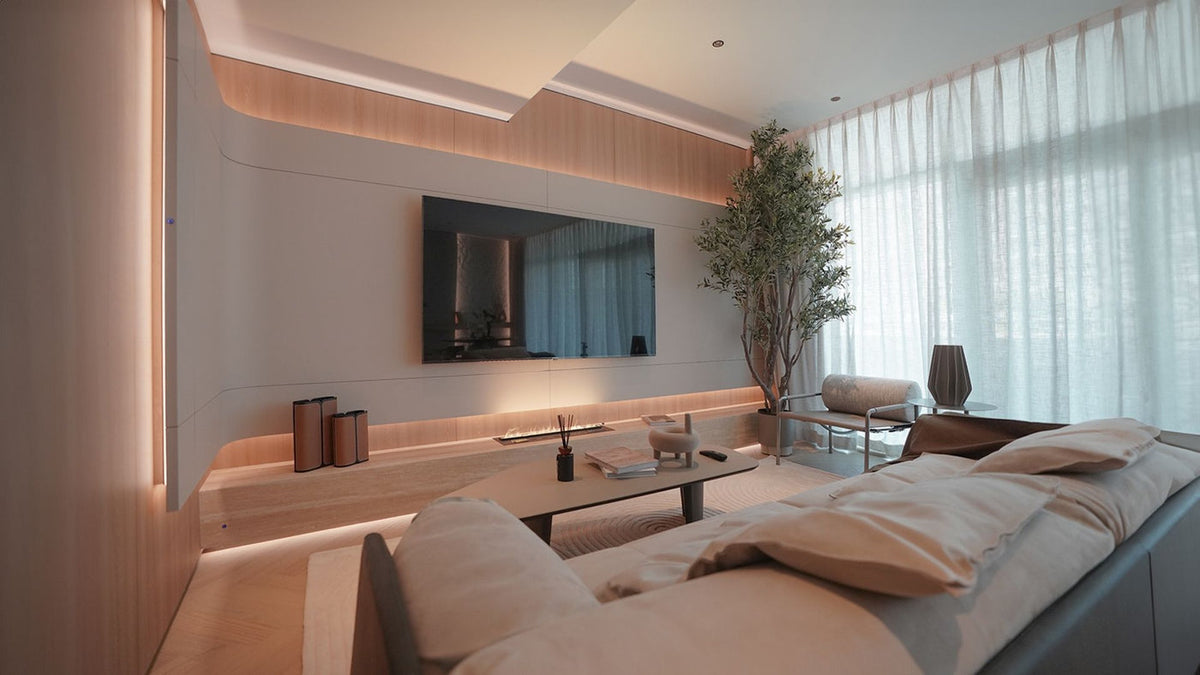
Looking at photographed finished projects tells you more than any brochure. The gap between a studio's render quality and its actual site execution is where most disappointments live. These completed UAE projects show the full journey from 3D concept to photographed handover across communities in both emirates.
What actually goes wrong when you manage it yourself
Many homeowners start a fit-out convinced that coordinating the pieces separately will save money. They hire a freelance designer for drawings, go directly to a joinery workshop for cabinetry, appoint a fit-out contractor for civil and tiling works, and plan to source furniture from various stores once the space is ready. On paper, this looks lean. In practice, it creates four separate accountability chains that rarely talk to each other cleanly.
The most common failure is the timeline cascade. The contractor finishes tiling two weeks late. The joinery workshop has already started fabrication based on the original handover date and cannot hold the pieces in their factory. The furniture arrives while trades are still on site. Each party points to another as the source of the delay. Nobody is lying, the system itself has no single owner, so problems compound instead of being resolved.
Material mismatches are the second recurring issue. The designer specifies a warm greige wall paint. The contractor buys a similar shade from a different brand because the specified one has a three-week lead time and they want to keep moving. The joinery uses a slightly cooler white for the cabinetry because the designer is not on site that day. The furniture arrives in a fabric that reads as distinctly warmer than everything else. None of these decisions were wrong individually; collectively, the room looks unresolved.
Blame-shifting is the third problem, and the most exhausting. When a skirting joint does not meet the tile correctly, is that the contractor's error or the tiler's? When the joinery panel does not align with the ceiling cornice, is that a site supervision failure or a drawing error? In a fragmented project, the homeowner becomes the de facto project manager, spending evenings on WhatsApp between parties who each have a reasonable case that the fault lies elsewhere.
Single accountability removes this entirely. When one studio holds the design drawings, the joinery fabrication, the construction contract and the furniture supply, every shortfall is their problem to resolve. You have one conversation, not four.
Do I need a separate contractor?
With a genuine turnkey studio, no. The studio either employs site teams directly or works with vetted subcontractors for whom they remain fully responsible under the client contract. You do not appoint the contractor, the studio does. You do not manage the sequence, the studio's project manager does. Your role is to make decisions when they are presented to you, not to chase progress.
The distinction matters because some companies in the UAE sell "design and supervision" services where they draw the plans but expect you to appoint and manage the contractor independently. That is a design service, not a turnkey service. The question to ask any studio before signing is simple: "If the contractor causes a delay, who resolves it, me or you?"
You should also clarify whether the studio holds a valid trade licence in the relevant emirate and whether their subcontractors are registered with the relevant municipality. In Dubai this means DDA or Dubai Municipality approval depending on the community; in Abu Dhabi it means Abu Dhabi City Municipality registration. A studio that cannot answer these questions fluently is worth pressing further before you commit.
How long does a villa fit-out take in Dubai?
The honest answer depends on scope, but these are realistic benchmarks based on how UAE projects actually run:
- Light cosmetic refresh (paint, lighting, furniture swap, no structural works): 6 to 10 weeks
- Mid-range renovation (new joinery, tiling, bathroom updates, full furnishing): 14 to 20 weeks
- Full luxury villa fit-out (structural modifications, custom joinery throughout, imported materials, landscaping coordination): 20 to 32 weeks
The critical path items are almost always material lead times and municipality approvals, not site labour. Stone from European quarries, custom upholstery from Italian manufacturers and specialist wallpapers can each carry six to twelve week lead times. A studio that does not flag these at the design stage is setting up a delay that nobody will be able to avoid later.
Real project reference: the Fay Al Reeman project in Al Shamkha, Abu Dhabi, a full villa fit-out including custom joinery, stone feature walls and complete furnishing, followed this kind of timeline from consultation through to photographed handover. The Murooj Al Furjan villa in Dubai, which includes a bookmatched under-stair bar and wabi-sabi material palette, is another example of a project where material selection and joinery drawings dominated the pre-site phase. You can see the before-and-after documentation in the completed projects gallery.
What happens after handover?
A handover is not the end of the relationship, or it should not be. After you receive the keys, the studio should still owe you a defects liability period during which any snagging items (paint touch-ups, hardware adjustments, joinery alignment issues) are rectified at no extra charge. Twelve months is standard for joinery and structural finishes; some studios extend this for premium projects.
You should also receive care documentation: how to clean the stone surfaces, what to use on timber joinery, how to maintain upholstered pieces in a humid climate. Interior design in a coastal or desert environment involves material considerations that differ from temperate climates, and good studios brief their clients on this at handover.
For studios like the one behind the Dubai Hills villa project, after-sales support extends to furniture replacements, styling updates and sourcing additional pieces as the client's needs evolve, particularly relevant in the UAE, where families grow and spaces get repurposed quickly. The design team that handled your project remains your contact, rather than being handed off to a generic customer service line.
Tips for commissioning a turnkey fit-out in Dubai or Abu Dhabi
- Visit a completed project, not just a showroom. Ask the studio to arrange a visit to a finished site. A showroom tells you about product quality; a delivered project tells you about execution quality.
- Ask about the payment milestone structure. Reputable studios tie payments to clearly defined deliverables, design sign-off, material orders placed, joinery installed, project completed. Avoid any studio that asks for a large upfront payment with no milestone structure.
- Clarify what "supervision" means. A site supervisor visiting twice a week is different from a dedicated site manager on-site daily during critical phases. Ask which applies to your project.
- Account for material lead times before setting a move-in date. Work backwards from when you want to move in. If imported materials carry a ten-week lead time and site works take twelve weeks, your design sign-off deadline is well before most people expect.
- Check that the studio has completed projects in your community. Some communities in Dubai and Abu Dhabi have specific fit-out rules, material restrictions or Owners Association requirements. A studio with prior experience in your development will navigate these faster.
Not sure which approach is right for your space?
Book a free interior design consultation and get expert advice on scope, timeline and materials, whether you are fitting out a new handover, renovating an existing villa or refreshing an apartment.
Frequently asked questions
What is included in turnkey interior design?
A full turnkey service covers consultation, site survey, concept mood boards, 2D space planning, 3D visualisation, joinery and wall design drawings, material selection, construction and site supervision, furniture supply, decor and final handover, all managed by one team under one contract.
How long does a villa fit-out take in Dubai?
A standard villa fit-out in Dubai runs between 16 and 28 weeks from the first consultation to handover, depending on scope. Light cosmetic upgrades can finish in 8 to 10 weeks; large villas with full custom joinery and wet-area works take six months or more.
Do I need a separate contractor for a turnkey interior design project?
No. The whole point of a turnkey service is that the studio acts as the single point of accountability, design, joinery, civil works, finishing and furnishing are all managed internally or through vetted subcontractors who the studio is responsible for.
What happens after handover in a turnkey fit-out?
After handover you should receive a full snagging check, a defects liability period (typically 12 months for structural and joinery works), maintenance contacts, and care instructions for materials such as stone, timber and upholstery. Ask for this in writing before signing the final payment milestone.
Is turnkey interior design more expensive than hiring separately?
Not necessarily. Coordinating separate parties often leads to scope gaps, rework charges and timeline overruns that increase the final cost significantly. A turnkey contract fixes scope and accountability upfront, which tends to protect the budget better than a fragmented approach.
Can a turnkey studio handle both Abu Dhabi and Dubai projects?
Yes. Several UAE-based studios operate across both emirates. Check that the studio has an active trade licence and completed projects in the emirate where your property sits, since municipality approvals and contractor registrations differ between Dubai and Abu Dhabi.
The bottom line
Turnkey interior design is not a premium add-on, it is a structural decision about who carries the risk of your project. When one studio owns design, execution and furnishing, the incentive to deliver a coherent, on-time result runs all the way through the contract. When those responsibilities are split across four separate parties, the incentive for each is to protect their own scope, not to solve the project as a whole.
The 553+ fit-outs documented across communities in Dubai and Abu Dhabi, from Fay Al Reeman in Al Shamkha to the Dubai Hills villa to Murooj Al Furjan in Al Furjan, represent exactly this kind of single-accountability model. You can see the full range of completed work, including renders alongside finished photography, through the interior design service page.
- Best for homeowners who want zero coordination stress: ebarza, a full turnkey studio with in-house site management
- Best for tight timelines: studios with an existing supplier network and material stock in the UAE
- Best for large villas with custom requirements: studios with documented experience in your community and access to named designers
- Best for Abu Dhabi projects: confirm the studio has Abu Dhabi municipality registration and completed projects in the emirate
- Best for design quality you can verify: studios that publish side-by-side renders and finished photography for named, located projects
Ready to see what a proper turnkey process looks like?
Explore completed projects across Dubai and Abu Dhabi, or book a free consultation at the Palm Jumeirah Mall or Yas Mall showroom.





Leave a comment
This site is protected by hCaptcha and the hCaptcha Privacy Policy and Terms of Service apply.